Sony Music and A-List Coalition Declare War on "AI Theft"
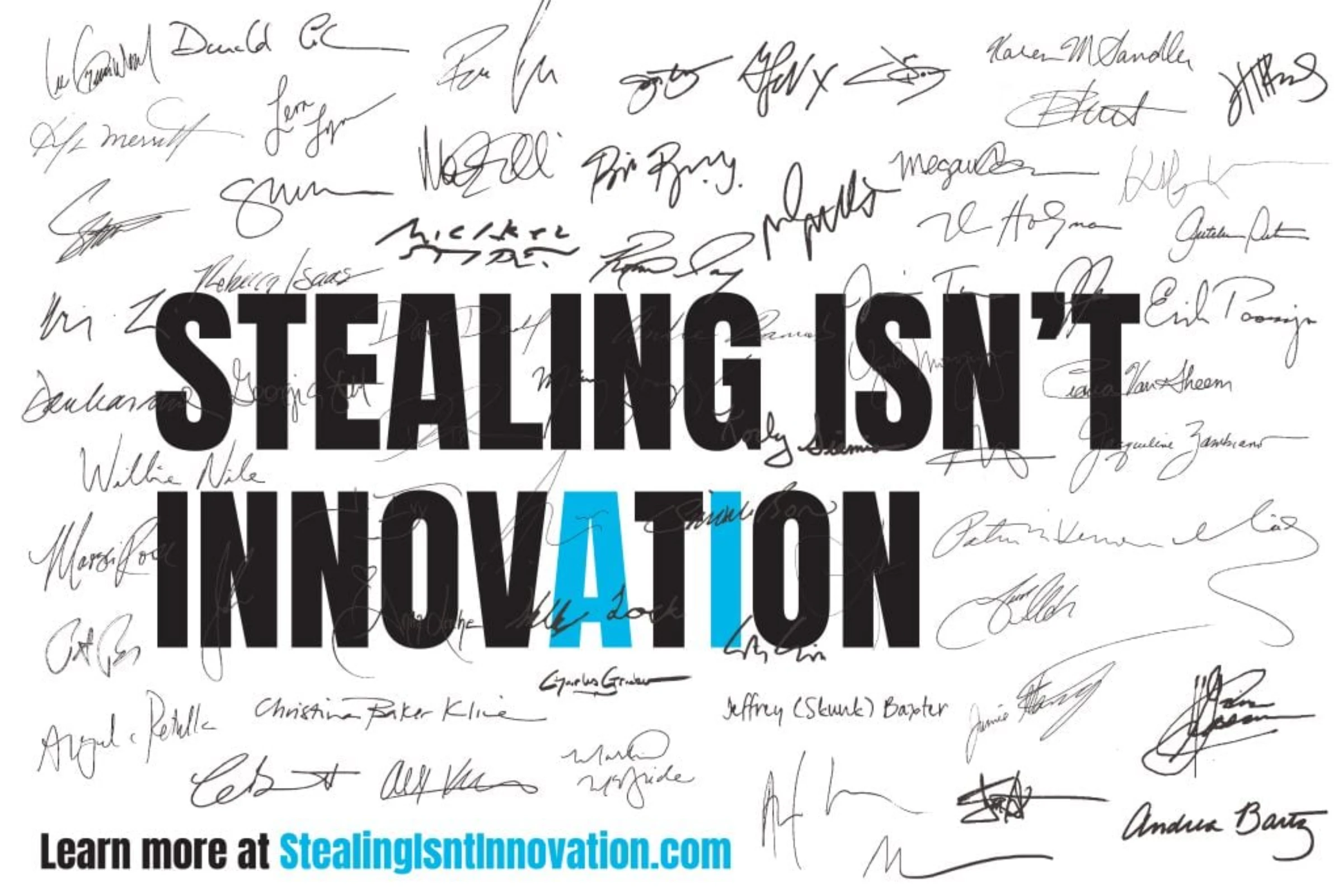

Sony Music Group officially joined forces with the Human Artistry Campaign (HAC) on January 22, 2026, to launch the "Stealing Isn’t Innovation" advocacy initiative. This high-profile campaign represents a broad cross-section of the American creative community—including over 800 musicians, actors, and authors—who are calling on the U.S. Congress to strictly uphold copyright laws against AI companies that utilize human-made work without authorization or compensation. The movement is backed by a powerhouse roster of signatories, including Scarlett Johansson, R.E.M., Questlove, Cate Blanchett, Cyndi Lauper, and Billy Corgan, all united under the central message: "Stealing our work is not innovation. It's theft, plain and simple."
The campaign’s timing is critical, as it coincides with a period of intense legal and legislative debate in Washington regarding the definition of "Fair Use" in the age of generative AI. By running full-page advertisements in major outlets like The New York Times, the coalition is attempting to steer the narrative away from technological "progress" and toward the preservation of human livelihoods. The effort follows the blueprint of the successful "Make It Fair" campaign in the United Kingdom, which saw legends like Kate Bush and Annie Lennox successfully lobby to defeat proposals that would have granted AI firms broad exemptions from copyright liability. In the U.S., the campaign specifically warns that the "illegal mass harvesting" of creative works fuels an ecosystem of "AI slop"—low-quality, derivative content that threatens to drown out original human artistry and destabilize the $1 trillion U.S. creative sector.
The Licensing Mandate: A Technical Blueprint for Cooperation
Beyond the ethical protest, "Stealing Isn’t Innovation" serves as a strategic push for a "licensed-only" ecosystem. Sony Music and its partners argue that a viable market for authorized AI training already exists, citing recent landmark deals between major labels and platforms like Udio and Suno. These partnerships prove that AI innovation does not require the dismantling of intellectual property rights; rather, it requires a transparent framework where data ingestion is treated as a commercial transaction. The campaign is pushing for federal legislation that would require AI developers to disclose their training datasets and provide a clear "opt-out" mechanism for any artist who does not wish to have their work used to train a machine.
This coalition is particularly focused on preventing the "normalization" of data scraping. The legal argument presented by the campaign suggests that while a search engine "indexing" a website is transformative, a generative AI "ingesting" a song to create a competing product is purely exploitative. By joining this movement, Sony Music is signaling that it will no longer tolerate the "move fast and break things" ethos of Silicon Valley. Instead, the industry is demanding a future where technological breakthroughs are built on a foundation of consent, credit, and compensation, ensuring that the "next big thing" in music is still created by a human being.